Probiotic Cultures
An educational exploration of probiotic microorganisms: their presence in traditional fermented foods, concept of beneficial bacteria, and roles in digestive and gut environmental health.
Understanding Probiotics
Probiotics are live beneficial microorganisms—primarily bacteria and some yeasts—that naturally occur in fermented foods and some food-derived supplements. The term "probiotic" means "promoting life," reflecting the concept that these microorganisms support various bodily functions.
The human digestive tract hosts a complex ecosystem of microorganisms collectively called the microbiota or microbiome. This microbial community participates in digestion, immune function, and the production of certain nutrients. Consuming foods with live cultures may support this microbial ecosystem.
Probiotic Cultures in Traditional Fermented Foods
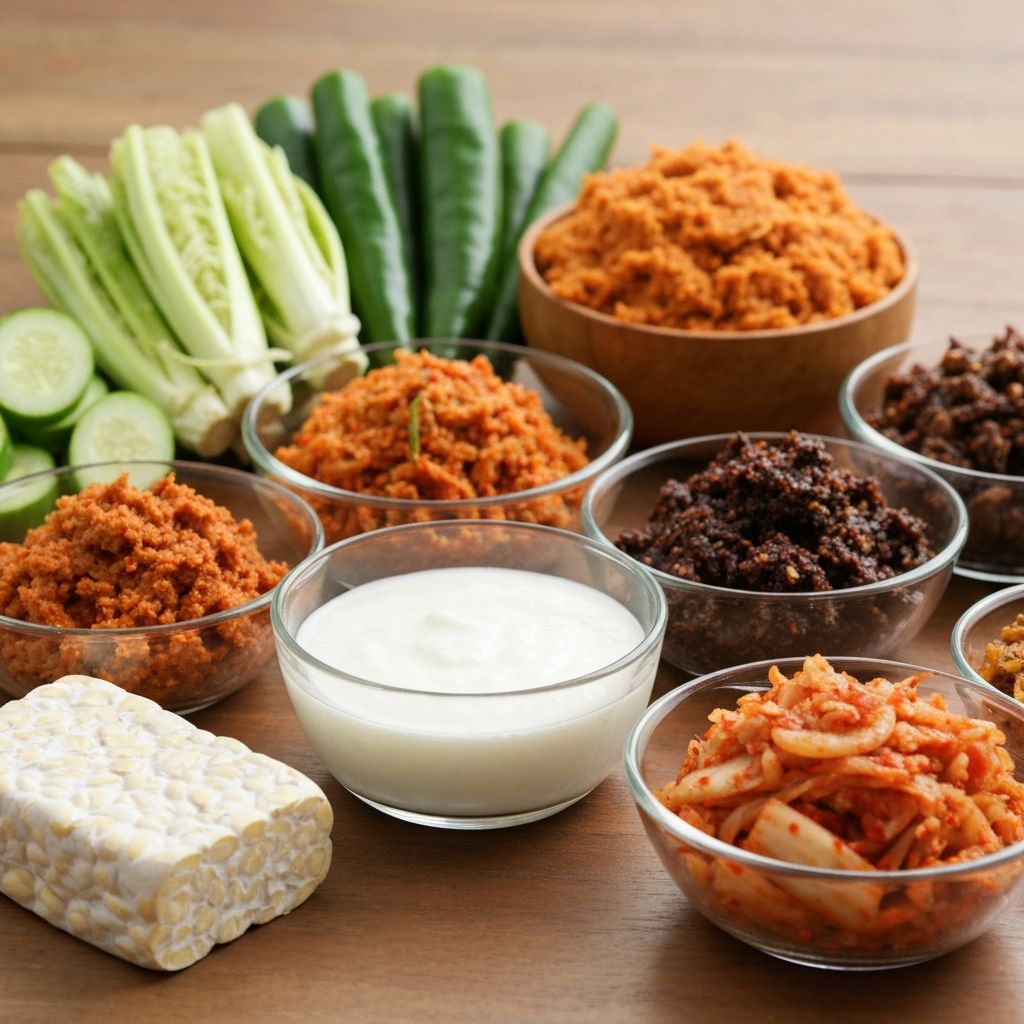
Indonesian Fermented Foods
Indonesia has a rich tradition of fermented foods naturally containing probiotic cultures:
- Tempeh: A fermented soybean cake containing beneficial molds and bacteria; staple protein source in Indonesian cuisine
- Fermented Soy Sauce (Kecap): Traditional fermentation of soybeans and grains introduces multiple probiotic species
- Fermented Vegetable Preparations: Pickled vegetables using traditional salt fermentation methods contain beneficial bacteria
- Fermented Fish Products: Traditional fermented shrimp and fish pastes contain salt-tolerant beneficial microorganisms
Common Probiotic Fermented Foods Globally
Yogurt: Dairy product fermented with Lactobacillus bulgaricus and Streptococcus thermophilus, often with added probiotic strains.
Kefir: Fermented milk drink containing diverse probiotic bacteria and yeasts.
Sauerkraut and Kimchi: Fermented vegetables containing Lactobacillus and other beneficial bacteria species.
Miso: Fermented soybean paste with probiotic cultures; used in soups and seasonings.
Kombucha: Fermented sweet tea containing bacteria and yeast cultures.
Concept of Gut Environment
The Digestive Microbiota
The human gastrointestinal tract contains trillions of microorganisms representing hundreds of species. This microbial community:
- Participates in the breakdown of dietary fiber into short-chain fatty acids
- Produces certain vitamins (such as K2 and some B vitamins)
- Supports immune system development and function
- Maintains the integrity of the intestinal barrier
- Competes with potentially harmful pathogens for space and resources
Factors Affecting Gut Microbial Balance
The composition of the microbiota is influenced by:
- Diet: Fiber content, diverse plant foods, and fermented foods support beneficial bacteria
- Antibiotics: These medications can disrupt the microbial balance
- Stress and Sleep: Lifestyle factors influence microbial composition
- Age and Individual Genetics: The microbiota changes throughout life and varies between individuals
Incorporating Fermented Foods into Daily Eating
Traditional Approaches
Indonesian and other Asian dietary traditions naturally incorporate fermented foods in everyday meals. Small amounts of fermented foods consumed regularly—such as a serving of tempeh, a spoonful of fermented sauce, or pickled vegetables—introduce beneficial probiotic cultures as part of normal eating.
Practical Integration
Fermented foods can be added to meals in numerous ways:
- Include tempeh in stir-fries, curries, or grilled preparations
- Use fermented sauces and pastes as seasonings in soups and dishes
- Add fermented vegetables as side dishes or condiments
- Consume yogurt with meals or as a snack
- Include miso in broths or traditional soup preparations
Variety and Balance
Rather than focusing on single fermented foods, consuming a variety of them across the week introduces diverse probiotic species. Combined with adequate fiber intake from vegetables, fruits, and whole grains, this supports an environment favorable to beneficial microorganisms.
Explore Related Topics
Learn about other supportive compounds and how traditional dietary practices support overall wellness.